← 🇮🇳 Indian history · usually met in Std 6-12
One of the earliest urban civilisations, with planned cities, drains and standard weights — and a script nobody has read.
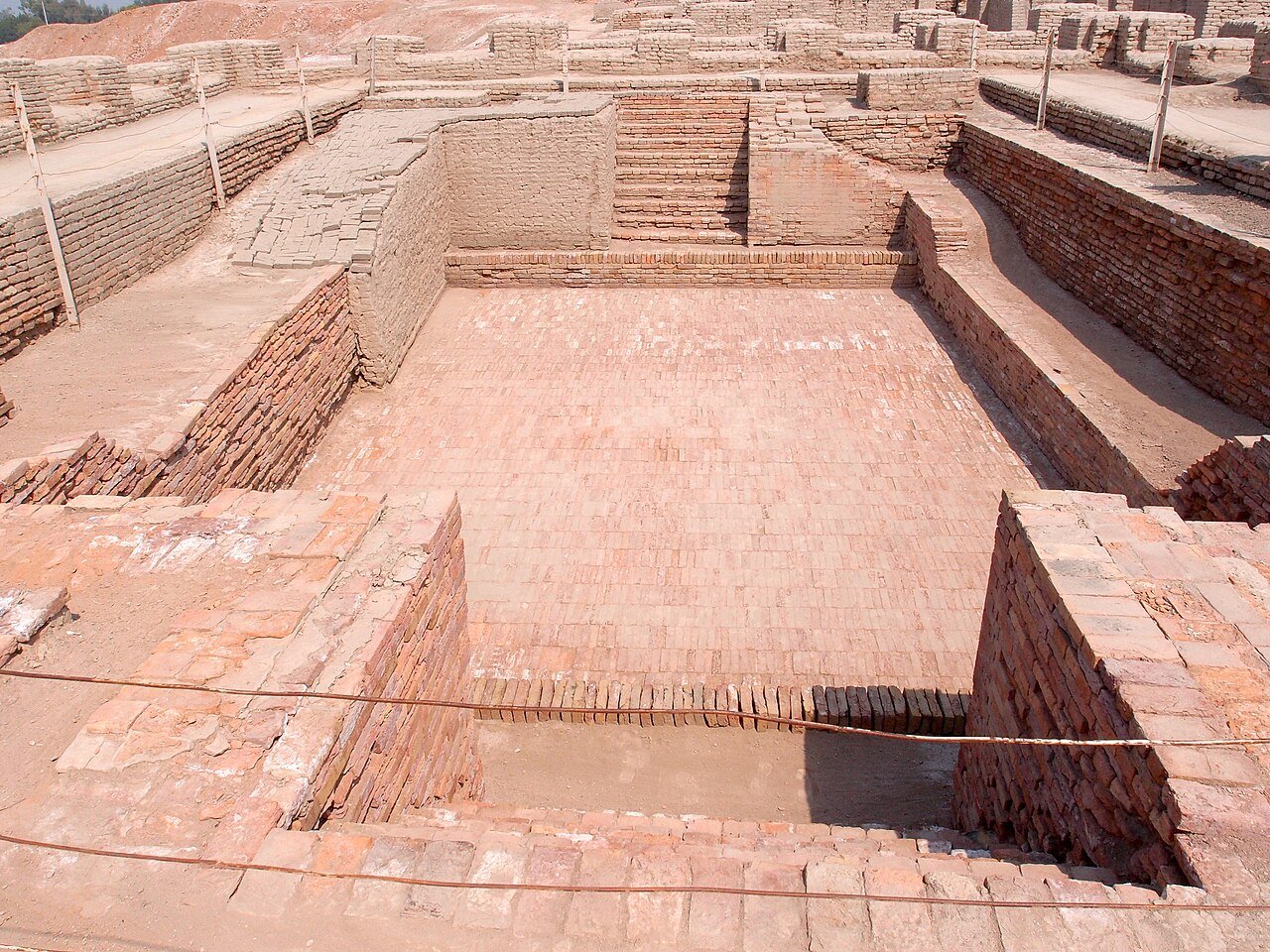
From roughly 2600 BCE, cities such as Harappa, Mohenjo-daro, Dholavira and Lothal were built on a grid, with brick houses, covered drains, public wells and large granaries. The bricks follow standard proportions across hundreds of kilometres, and so do the weights, which implies a shared system of measurement and a great deal of organisation.
What is missing is as striking as what survives. There are no obvious palaces or huge temples, and no clear evidence of a warrior elite, which is unusual for a civilisation of that scale. The script appears on thousands of seals but the inscriptions are short and there is no bilingual text, so it remains undeciphered. Decline from around 1900 BCE was probably gradual, with changing river courses and climate among the likely causes rather than a single catastrophe.
Want to see it moving? Search YouTube for “The Indus Valley civilisation” ↗ — we send you to the search rather than to one video, because a link to one video eventually rots.
This entry was written for Star Student in our own words — it is a summary, not a source. Here is where the people who actually hold these facts keep them. Go and check.
Your own textbook ↗Balbharati publishes the textbooks free to read online. Your chapter is the thing to check first — an encyclopedia is a summary, and the syllabus is the syllabus. Archaeological Survey of India ↗The body that excavates and protects the sites — Harappa, the Ashokan pillars, the monuments themselves.Last gone through: 1 October 2026 · How these entries are written
 Ask GuruAcharya Samayeshwar
