
 The Ultimate Book of Mind Maps
Tony Buzan invented mind mapping in the 1970s after noticing that the brain does not think in lists — it thinks in branches, colours and pictures. Here is how to build maps that make revision fast and joyful.
Start reading ↓ 🧘 Ask Guru
A mind map is a picture of how ideas connect. Because the whole chapter sits on one page, your eye — and your memory — can take it in at once. Toppers revise a full subject the night before an exam from 12 such pages.
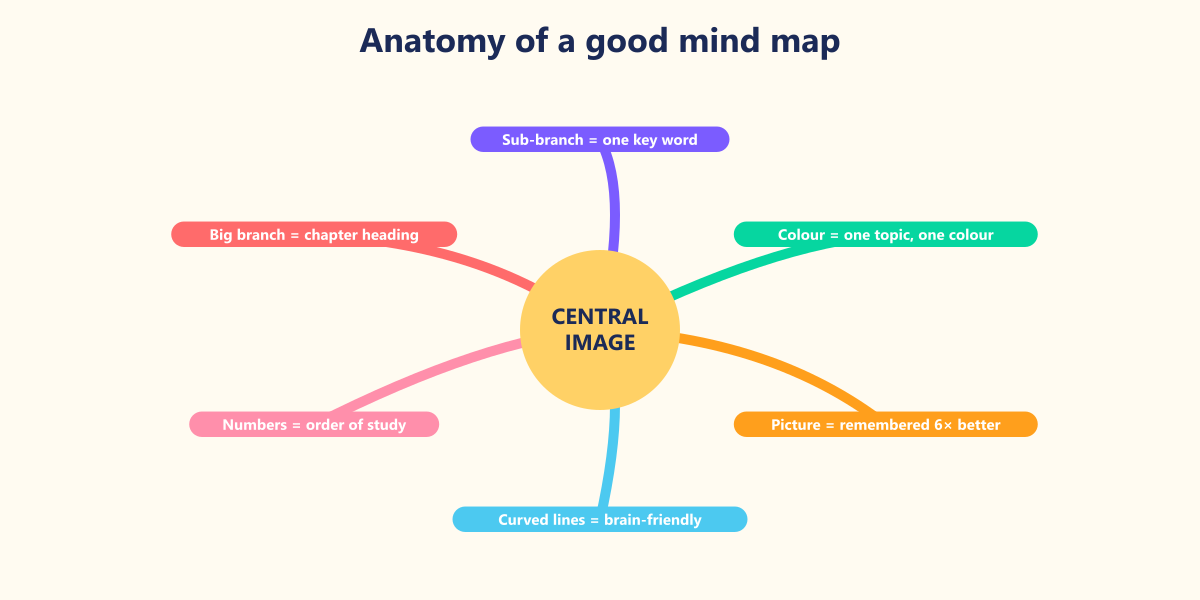
The classic. One map per chapter; the set becomes your final revision file.
Before a 5-mark answer or an essay, a 60-second mini-map of points guarantees you do not miss one.
Two central images (mitosis / meiosis) sharing branches — differences jump out visually.
Centre: "March exams". Branches: subjects. Twigs: chapters with review dates. Tick as you go.
Centre: you. Branches: interests, strengths, dreams, people to ask. Clarity arrives on paper.
One big map on a chart paper, each friend owns a branch, then everyone presents theirs. Teaching = strongest learning.
Mind maps also fight the two biggest revision problems: overwhelm (the whole chapter fits on one page, so it feels doable) and passivity (you must decide what matters, which is active thinking).
Paper first. Drawing by hand activates motor memory and forces choices about space. Apps are useful for very large maps, sharing with friends, or students who redraw often. Free options: XMind, FreeMind, Coggle, and the built-in drawing tools in any tablet notes app.
Books and guides from the Star Student Library for this topic — tap Read to open one here, or Download to keep the PDF.
The Ultimate Book of Mind Maps
 Developing Essential Study Skills
 The Buzan Study Skills Handbook
 Use Your Head
A topic you cannot crack, a definition, a full-marks answer, a question about life — Acharya Samayeshwar explains it aloud and in writing, for your board and Std.
 Ask GuruAcharya Samayeshwar