
 Chart of Intelligence & Memory
How to think clearly, solve problems, raise your IQ the honest way, and grow the emotional intelligence that decides how far your IQ can take you.
Start reading ↓ 🧘 Ask Guru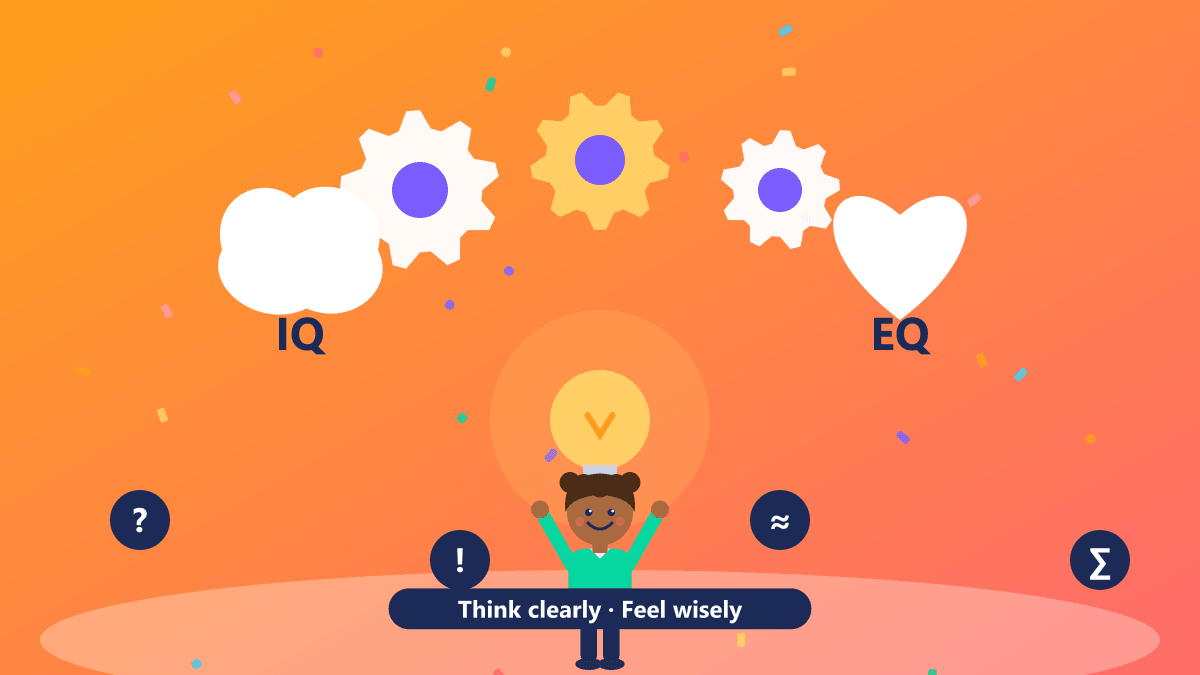
Intelligence is not one number. Psychologists now describe many intelligences — logical, verbal, spatial, musical, bodily, interpersonal, intrapersonal, naturalist — and every child is strong in some. This page shows how to strengthen the ones school measures and the ones life measures.
IQ is not fixed. Studies of schooling show that each extra year of education raises IQ by 1–5 points, and the "Flynn effect" shows whole populations gaining ~3 points a decade as thinking-rich activities spread. The brain grows with use.
Sudoku, chess, Rubik's cube, riddles, crosswords, KenKen. They train working memory, pattern-spotting and planning — the core of fluid intelligence.
Preetam Sir's drill: 40 subtraction sums and 10 divisions with fresh numbers, 40 minutes, against the clock. Mental arithmetic is weight-training for the brain.
Vocabulary is the single strongest predictor of verbal IQ. Comics, novels, an encyclopedia, the newspaper — every new word is a new tool.
Learning an instrument or a language rewires the brain for pattern and memory. Both show measurable IQ gains in children within a year.
Follow current affairs and science programmes. Knowledge is the raw material thinking works on — you cannot reason about what you do not know.
Ten minutes of calm breathing daily thickens the prefrontal cortex (planning and attention). Ancient practice, modern brain scans.
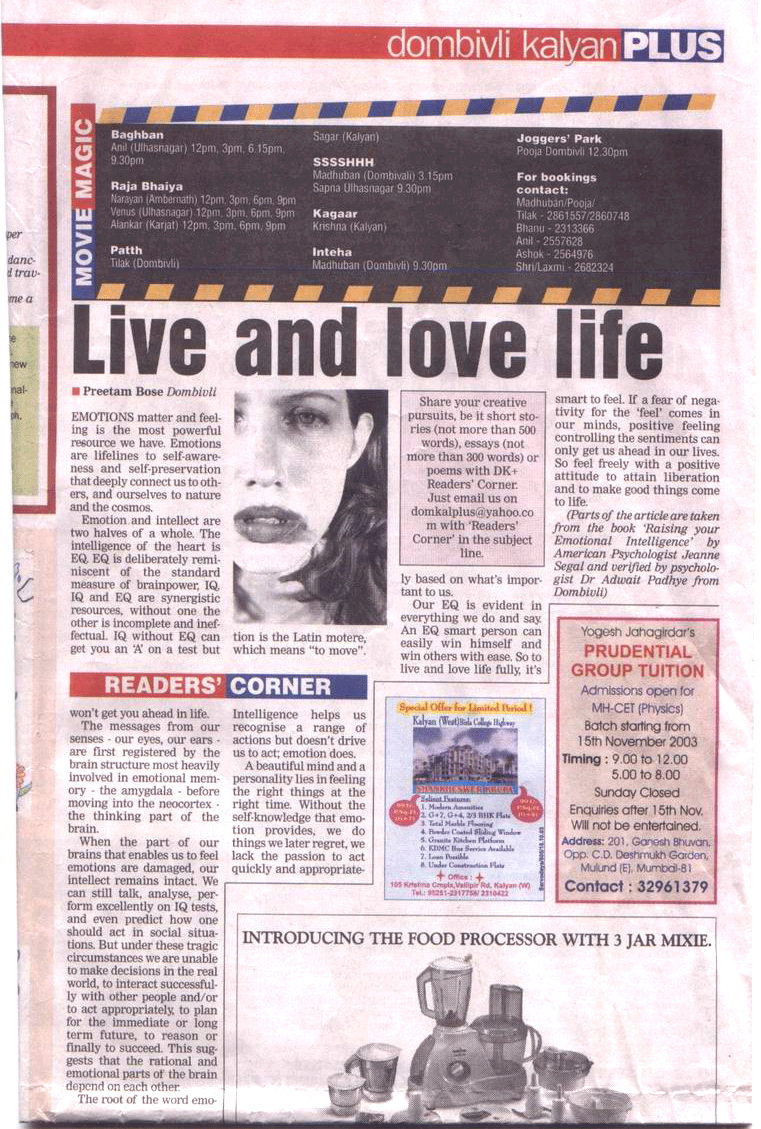
Daniel Goleman's research found that IQ predicts about 20% of life success; the rest depends heavily on EQ — knowing your feelings, managing them, and understanding other people's.
Name the feeling: "I am anxious, not angry." Naming a feeling reduces its power (the brain's amygdala calms when the language area labels it).
Pause before reacting. Count four breaths. Anger passes through the body in 90 seconds if you do not feed it.
Working for an inner goal (mastery, curiosity) lasts; working only for marks or praise fades. Find your own "why".
Read faces, tone and silence. Ask "what might they be feeling?" before "what should I say?"
Listen fully, disagree politely, apologise quickly, praise sincerely. These are learnable, like any subject.
Preetam Sir's original site "decoded" nine remarkable minds. Here is what a student can borrow from each.
| Mind | Their secret | Borrow it |
|---|---|---|
| Albert Einstein | Thought in pictures and "thought experiments" — riding a beam of light — before any equation | Draw the problem before you calculate it |
| Isaac Newton | Sat with one question for months ("why does the apple fall but the Moon does not?") | Stay with a hard problem longer than feels comfortable |
| Leonardo da Vinci | Notebooks: sketch + note + question on every page; art and maths as one subject | Keep an ideas notebook; draw your science |
| Stephen Hawking | A body that failed did not stop a mind that imagined black holes | Your limits are not where you think they are |
| Gautama Buddha | Mastered attention itself through meditation | Ten quiet minutes a day trains focus for everything else |
| Jesus Christ | Taught the hardest ideas through simple stories that ordinary people remembered | If you can put it in a story, you understand it |
| Swami Vivekananda | Discipline, memory (he could recall whole books), and fearless speech | "Arise, awake, and stop not till the goal is reached" |
| Sigmund Freud | Looked beneath behaviour for hidden causes — the subconscious | Ask why you do what you do; habits have roots |
| Mahatma Gandhi | Turned a belief (ahimsa) into daily discipline and moved a nation | Small daily acts, repeated, change everything |
Every profession is a type of thinking practised for years. Recognise your type early.
Bold memory + calm under pressure + deep care for people. Loves biology and can study for long hours.
Sees how things fit and fail; loves technical detail and speed; thinks in systems and diagrams.
Captures images in the mind; thinks laterally; notices what others walk past.
A "memory twister" — mathematical acuity, endless curiosity, restless energy for the next question.
A sharp, delegating mind; speaks with momentum; stays close to people; devoted to something bigger than self.
Writes to the heart; carries the world's questions; turns mysteries into stories.
Memorised text and rhythm, expression, humour, verbatim intelligence, thousands of hours of practice.
Understands people, decides quickly, stays humble and organised; wins hearts; "work is worship".
Books and guides from the Star Student Library for this topic — tap Read to open one here, or Download to keep the PDF.
Chart of Intelligence & Memory
 Critical Analytical Thinking
 Questions Decoded
 101 Activities For Teaching Creativity And Problem Solving
 Emotional Design: Why We Love (or Hate) Everyday Things
 Critical Thinking: Problem Solving & Decision Making
 How to Win Every Argument
 Scientific American Mind: Does Intelligence Matter?
A topic you cannot crack, a definition, a full-marks answer, a question about life — Acharya Samayeshwar explains it aloud and in writing, for your board and Std.
 Ask GuruAcharya Samayeshwar