← 🇮🇳 Indian history · usually met in Std 6-12
The man who made non-violent mass action a practical political method, and who said repeatedly that it was harder than fighting, not easier.
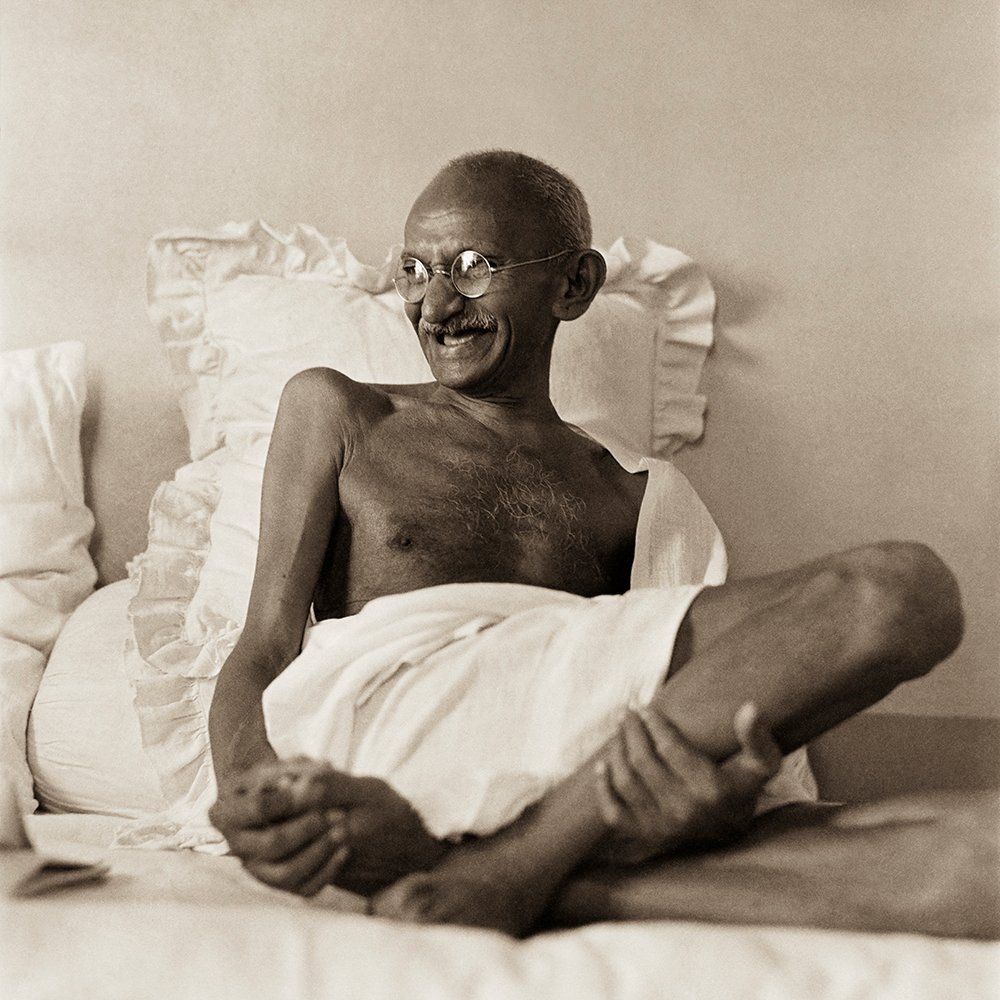
Born in 1869 in Porbandar, trained as a barrister in London, Gandhi developed satyagraha — holding firmly to truth — during two decades in South Africa resisting racial laws. Back in India he led campaigns at Champaran and Kheda, the non-cooperation movement, the Salt March of 1930 and Quit India in 1942. He insisted on the link between means and ends: a freedom won by methods he thought wrong would, he argued, produce a country shaped by those methods.
He also worked on what he called constructive programme — village industry, sanitation, education, Hindu-Muslim relations, and against untouchability, though Ambedkar criticised his approach to caste as too gradual and too paternalistic. He was assassinated on 30 January 1948. Teaching him honestly means including the criticisms as well as the achievements; he recorded a good many of his own mistakes himself.
Want to see it moving? Search YouTube for “Mohandas Karamchand Gandhi” ↗ — we send you to the search rather than to one video, because a link to one video eventually rots.
This entry was written for Star Student in our own words — it is a summary, not a source. Here is where the people who actually hold these facts keep them. Go and check.
Your own textbook ↗Balbharati publishes the textbooks free to read online. Your chapter is the thing to check first — an encyclopedia is a summary, and the syllabus is the syllabus. Archaeological Survey of India ↗The body that excavates and protects the sites — Harappa, the Ashokan pillars, the monuments themselves.Last gone through: 1 October 2026 · How these entries are written
 Ask GuruAcharya Samayeshwar
