← 🌍 Earth science · usually met in Std 6-10
A thin shell of gas — mostly nitrogen, about a fifth oxygen — in layers, holding in warmth and keeping out the worst of the Sun's radiation.
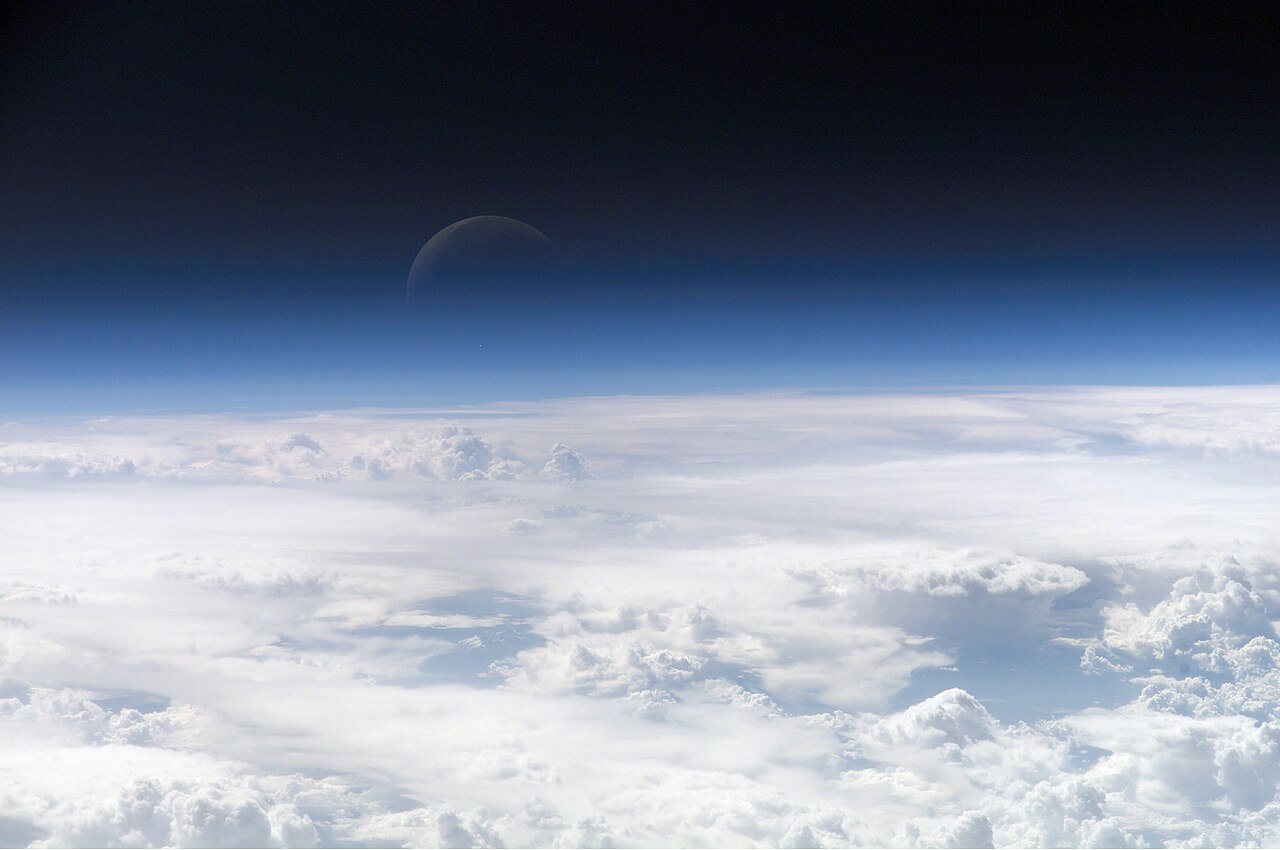
By volume the air is about 78% nitrogen and 21% oxygen, with argon, carbon dioxide and water vapour making up the rest. It is layered: the troposphere where all the weather happens, the stratosphere above it holding the ozone layer, then the mesosphere and thermosphere, thinning until there is no clear edge at all.
Two of its jobs are easy to overlook. The ozone layer absorbs most of the Sun's ultraviolet, without which life on land would be in serious trouble — and the agreement to phase out the chemicals destroying it is one of the few global environmental efforts that clearly worked. The greenhouse effect, meanwhile, keeps the planet about thirty degrees warmer than it would otherwise be; the problem is not that it exists but that we are strengthening it.
Want to see it moving? Search YouTube for “The atmosphere” ↗ — we send you to the search rather than to one video, because a link to one video eventually rots.
This entry was written for Star Student in our own words — it is a summary, not a source. Here is where the people who actually hold these facts keep them. Go and check.
Your own textbook ↗Balbharati publishes the textbooks free to read online. Your chapter is the thing to check first — an encyclopedia is a summary, and the syllabus is the syllabus. Geological Survey of India ↗Rocks, earthquakes, the Himalaya and seismic zoning. India Meteorological Department ↗The monsoon, rainfall and cyclone warnings, from the department that issues them.Last gone through: 1 October 2026 · How these entries are written
 Ask GuruAcharya Samayeshwar
