← 🪐 Space · usually met in Std 5-10
An average star, 150 million kilometres away, fusing hydrogen into helium and supplying nearly all the energy used on Earth.
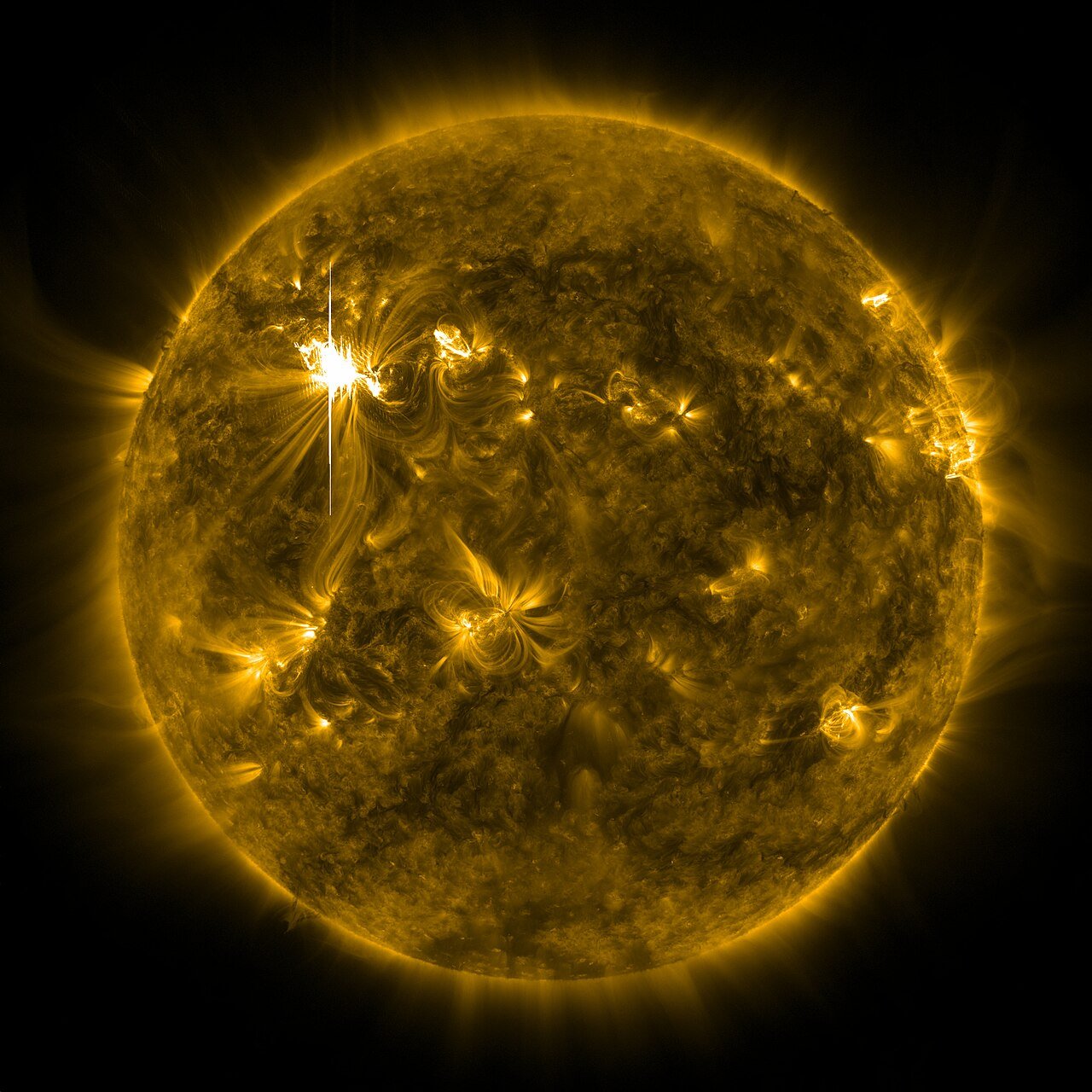
The Sun is a ball of plasma held together by its own gravity. In the core, pressure and temperature are high enough for hydrogen nuclei to fuse into helium, turning a small amount of mass into an enormous amount of energy. That energy takes a surprisingly long time to work its way out through the dense interior, and then eight minutes to cross space to us.
Almost every energy source on Earth is the Sun at one remove. Food is stored sunlight. Coal and oil are stored sunlight from ancient life. Wind is driven by uneven heating of the atmosphere, and hydropower by the water cycle, which the Sun powers. The exceptions are nuclear, geothermal and tidal energy.
Want to see it moving? Search YouTube for “The Sun” ↗ — we send you to the search rather than to one video, because a link to one video eventually rots.
This entry was written for Star Student in our own words — it is a summary, not a source. Here is where the people who actually hold these facts keep them. Go and check.
Your own textbook ↗Balbharati publishes the textbooks free to read online. Your chapter is the thing to check first — an encyclopedia is a summary, and the syllabus is the syllabus. ISRO ↗India's space agency — missions, instruments and results, first hand. NASA — the solar system ↗Planetary data and images from the people flying the spacecraft.Last gone through: 1 October 2026 · How these entries are written
 Ask GuruAcharya Samayeshwar
