← 🌍 Earth science · usually met in Std 7-12
Stored strain in rock released suddenly as shaking. The magnitude scale is logarithmic, so each step is far bigger than it sounds.
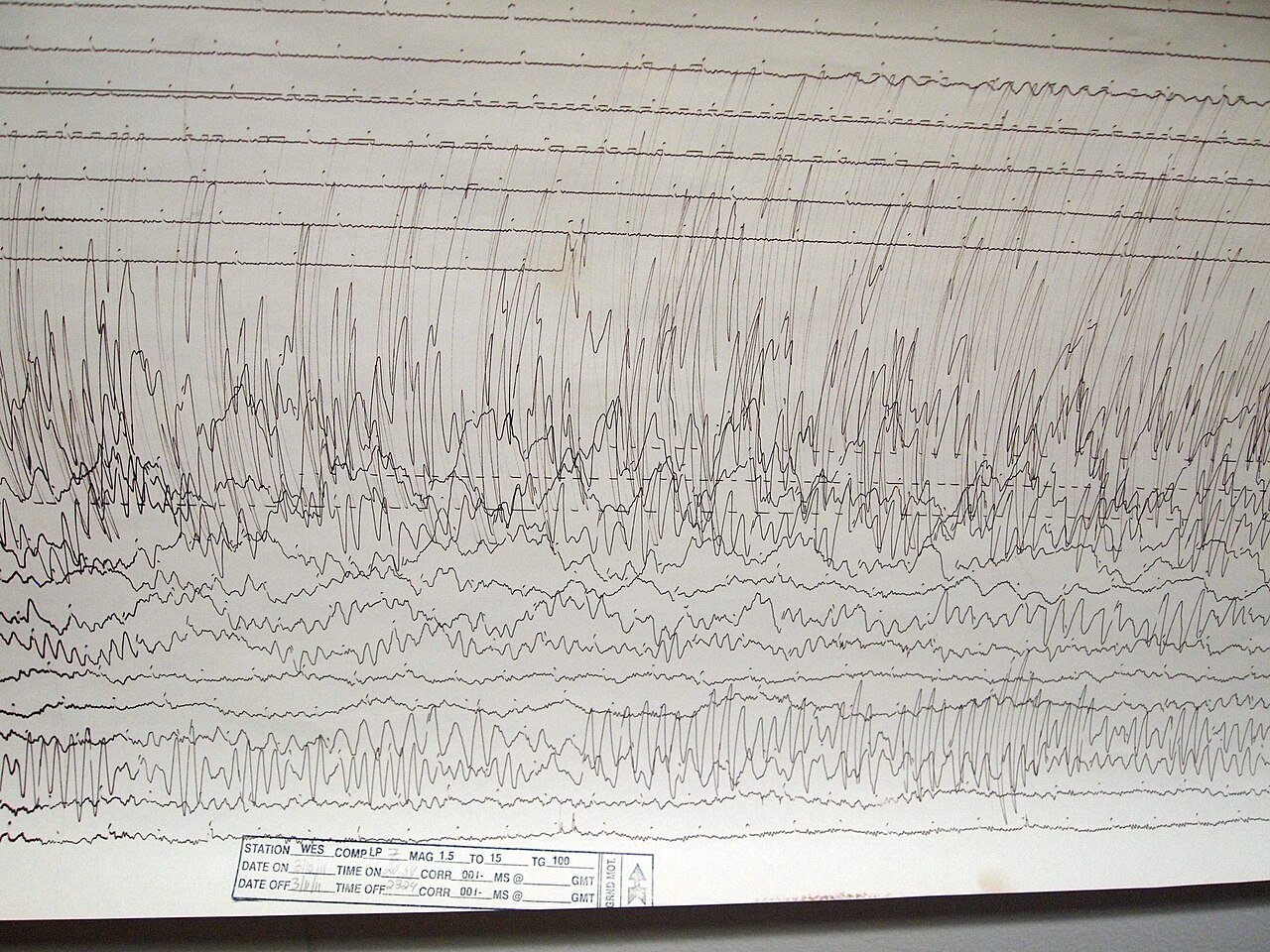
Rocks on either side of a fault are pushed past each other but held by friction. Strain builds for years or centuries, and when the rock finally slips, the stored energy travels outward as seismic waves. The focus is where it happens underground, the epicentre is the point on the surface above it.
Magnitude measures the energy released. A step of one on the scale is about thirty-two times the energy, so a magnitude 7 is not slightly worse than a 6 — it is in a different category. Intensity is a different idea: how strongly it was felt in a particular place, which depends on depth, distance, and above all the ground and the buildings. Most deaths in earthquakes are caused by buildings, which is why building codes matter more than prediction, and why the same magnitude kills thousands in one country and nobody in another.
Want to see it moving? Search YouTube for “Earthquakes” ↗ — we send you to the search rather than to one video, because a link to one video eventually rots.
This entry was written for Star Student in our own words — it is a summary, not a source. Here is where the people who actually hold these facts keep them. Go and check.
Your own textbook ↗Balbharati publishes the textbooks free to read online. Your chapter is the thing to check first — an encyclopedia is a summary, and the syllabus is the syllabus. Geological Survey of India ↗Rocks, earthquakes, the Himalaya and seismic zoning. India Meteorological Department ↗The monsoon, rainfall and cyclone warnings, from the department that issues them.Last gone through: 1 October 2026 · How these entries are written
 Ask GuruAcharya Samayeshwar
