Tower of Cups
✨ Ten flimsy paper cups end up holding a whole book above your head height.
🧰 You need
- ten paper or plastic cups
- four squares of stiff card
- a light book
- a measuring tape
👀 What you will see
Cups standing upright squash easily, while cups stacked upside down in a group hold up a surprising load. A tower with a wide base stands taller before it wobbles. When it fails, one cup usually crumples first.
🧪 Do it
- Stand three cups upside down in a triangle and lay a card square on top.
- Build the next layer of cups on the card, then another card, and keep going.
- Measure how tall your tower is before it wobbles.
- Place the light book on the very top and watch what happens.
- Rebuild with a wider base of four or five cups and test again.
- Say which tower held more and why you think so.
💡 Why it happens
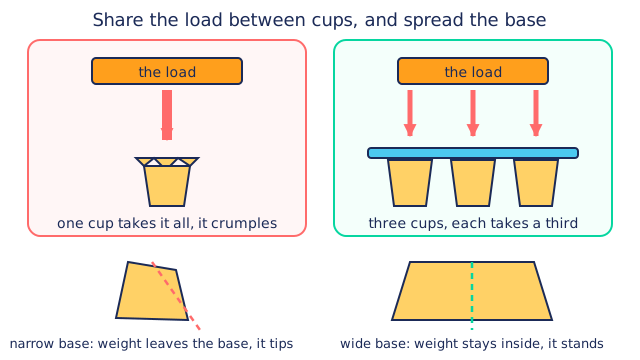
The weight pressing down on a structure is called the load, and it has to travel all the way down to the floor. Sharing the load between three or four cups means each cup carries only a small part of it, so none of them crumples. A wide base also makes the tower harder to tip over, because it has to lean much further before its weight moves outside the base. Real buildings do the same thing with columns and floors.
🔁 Now try this
Build two towers of the same height, one with three cups per layer and one with five, and see how many books each will hold.
🤔 Think about it
Why do real towers usually get narrower as they go up?
🧘 Ask the Acharya
“Why do real towers usually get narrower as they go up?” — ask him and he will explain it from your own chapters.
More for Std 1–2
Sink or Float Tray
A big plastic lid rests on the water while a tiny coin drops straight to the bottom.
Try it →Science15 minDancing Raisins
The raisins rise to the top, wobble and sink again, over and over, as if they had learned to dance.
Try it →Science10 minBalloon Hair Magic
A rubbed balloon makes your hair stand up and then bends a falling stream of water without ever touching it.
Try it →