← 🧪 Chemistry · usually met in Std 5-10
Two hydrogens and an oxygen, in a bent shape that gives the molecule a positive end and a negative one — and almost everything strange about water follows from that bend.
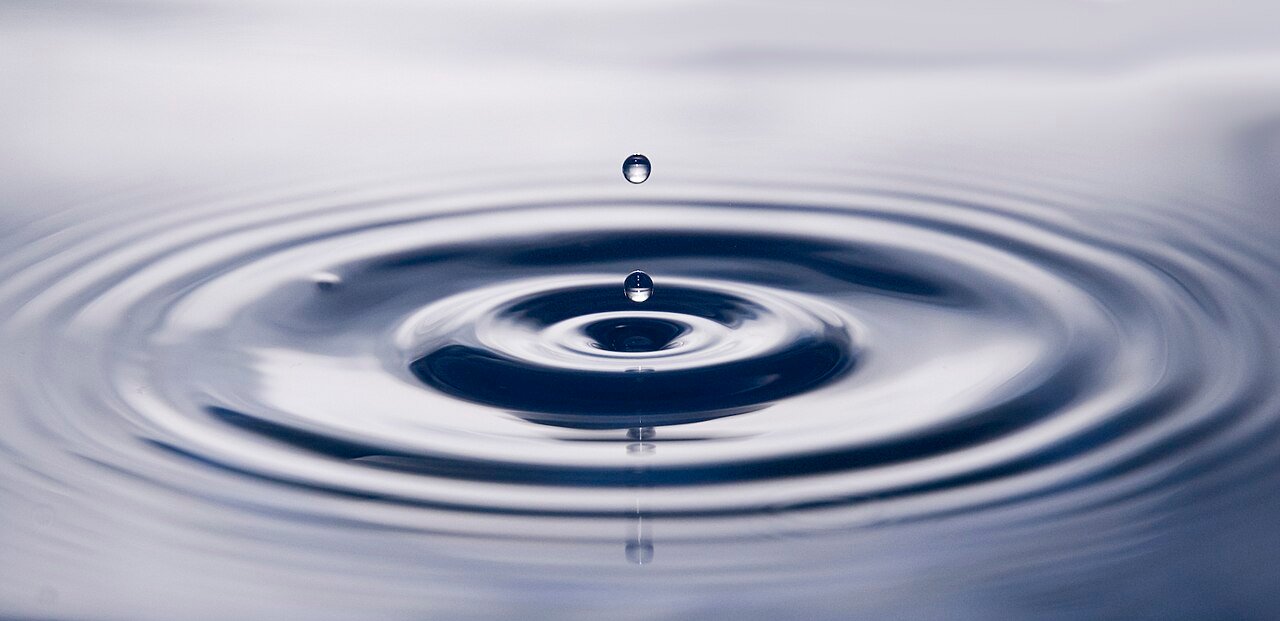
Because the molecule is bent and oxygen pulls electrons harder than hydrogen does, water is polar: slightly negative at one end, slightly positive at the other. Those ends attract each other across molecules, forming hydrogen bonds. That weak attraction, repeated countless times, is why water is liquid at room temperature when similar-sized molecules are gases, why it dissolves so many substances, and why it climbs up a narrow tube against gravity — the effect plants rely on to move water from root to leaf.
It is also why ice floats. On freezing, the hydrogen bonds lock the molecules into an open lattice that takes up more room than the liquid, so ice is less dense. Lakes therefore freeze from the top, leaving the water and the fish beneath alive. Almost no other substance behaves this way, and life as we have it would be impossible if water did not.
Want to see it moving? Search YouTube for “Water” ↗ — we send you to the search rather than to one video, because a link to one video eventually rots.
This entry was written for Star Student in our own words — it is a summary, not a source. Here is where the people who actually hold these facts keep them. Go and check.
Your own textbook ↗Balbharati publishes the textbooks free to read online. Your chapter is the thing to check first — an encyclopedia is a summary, and the syllabus is the syllabus.Last gone through: 1 October 2026 · How these entries are written
 Ask GuruAcharya Samayeshwar
